

(English version below)
En el marc del projecte Erasmus+ ALASVO, estem participant en una mobilitat de formació a Berlín, de l’11 al 16 de maig de 2026, dins del curs “Transforming Education: Integrating AI, AR, VR, and 3D Printing for Effective Learning”. L’objectiu principal d’aquesta estada és aprofundir en les possibilitats educatives de tecnologies emergents com la intel·ligència artificial, la realitat augmentada, la realitat virtual i la impressió 3D, així com reflexionar sobre el seu ús pedagògic a l’aula.
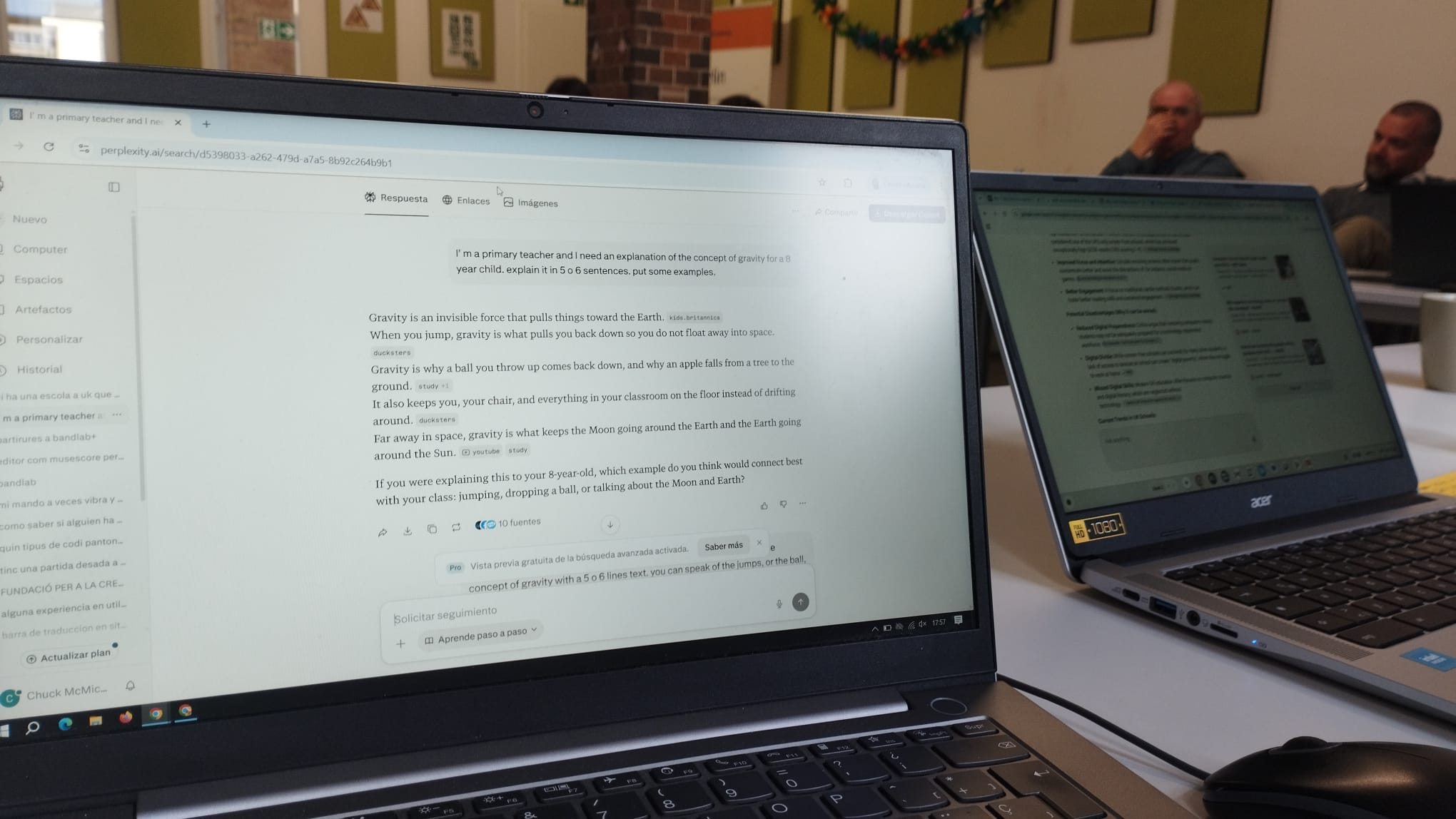
Durant les primeres sessions del curs, hem treballat especialment la intel·ligència artificial aplicada a l’educació. A partir de debats i activitats pràctiques, hem analitzat com funcionen els models d’IA, quines limitacions tenen i quins riscos poden comportar, especialment pel que fa als biaixos, les al·lucinacions o la protecció de dades. També hem reflexionat sobre el fet que la IA no “pensa”, sinó que funciona a partir de patrons estadístics i dades prèvies. Un altre dels aspectes treballats ha estat la creació d’indicacions o prompts eficients per obtenir respostes més útils i adaptades al context educatiu. Hem conegut diferents estructures per redactar prompts i hem vist com aquestes eines poden ajudar a personalitzar activitats, generar materials o adaptar recursos a alumnat amb necessitats diverses. Les sessions també han servit per descobrir diferents eines d’intel·ligència artificial orientades a la creació de presentacions, vídeos, música o recursos d’accessibilitat. Tot plegat s’ha combinat amb espais de debat sobre el paper que ha de tenir la tecnologia en l’educació i sobre la importància de mantenir una mirada crítica davant d’aquestes eines.
El curs compta amb participants de diversos països europeus, fet que està permetent compartir experiències i conèixer realitats educatives molt diferents. Hi participen centres com l’Istituto Comprensivo Statale Nord di Prato (Itàlia), especialitzat en llengües, música i competència digital; l’OURC “Dr. Zlatan Sremec” (Macedònia del Nord), dedicat a l’educació especial i al suport a alumnat amb necessitats educatives especials; o la Klaipedos Turizmo Mokykla (Lituània), centrada en la formació professional vinculada al turisme. També hi participen centres com Metis Videregående Bergen (Noruega), amb un fort sistema de mentoria i orientació personalitzada; l’IES La Florida (Múrcia), amb una destacada aposta per la internacionalització; el GEBKIM Vocational School (Turquia), especialitzat en química i automatització industrial; i l’Agrupamento de Escolas de Rio Tinto Núm. 3 (Portugal), que desenvolupa diversos projectes vinculats a la sostenibilitat i als itineraris artístics.
Aquesta experiència està resultant molt enriquidora tant en l’àmbit professional com personal, i ens ofereix noves idees i perspectives que posteriorment podrem compartir amb la resta de la comunitat educativa.
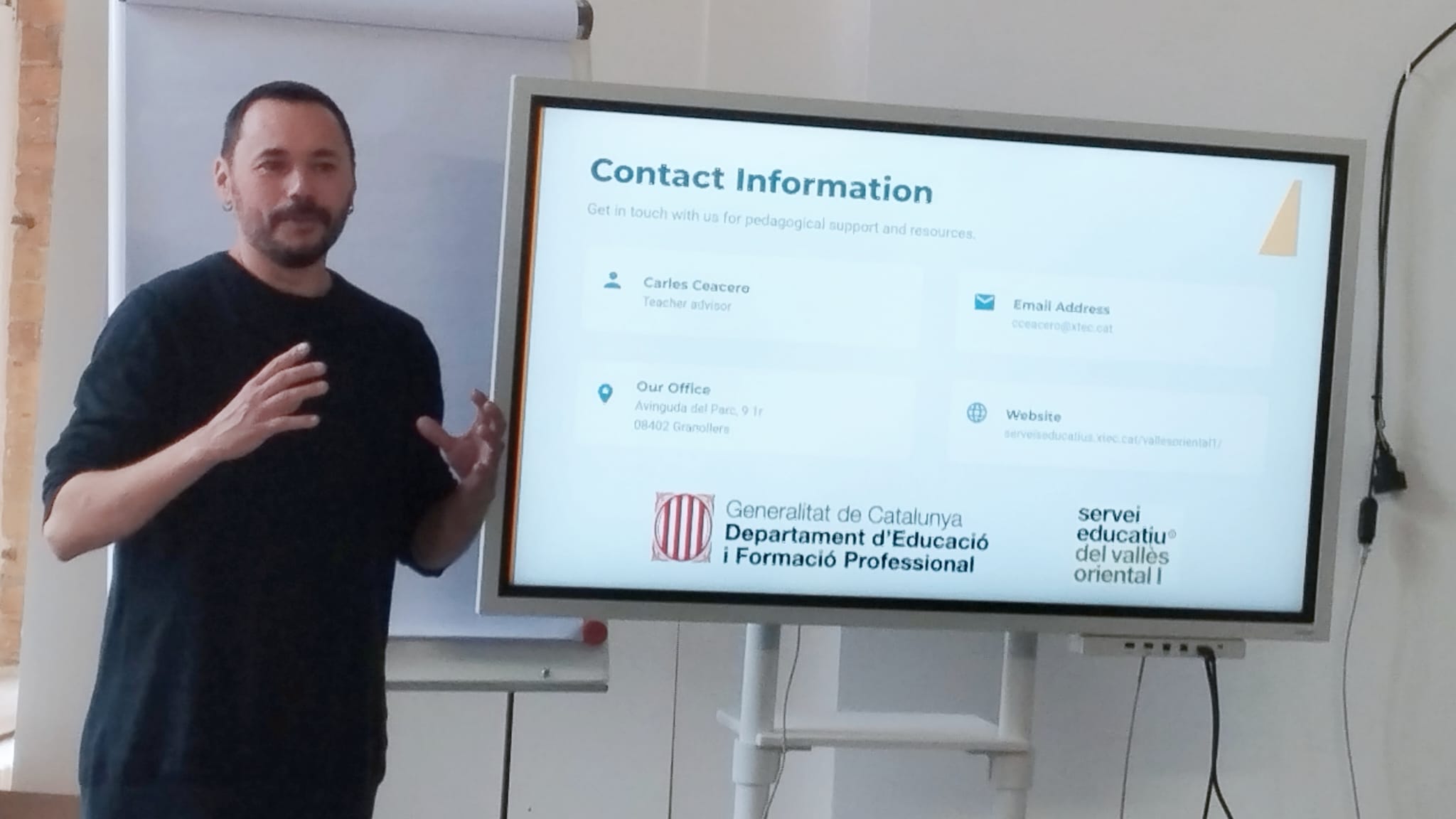

Within the framework of the Erasmus+ ALASVO project, we are taking part in a training mobility in Berlin from 11 to 16 May 2026, within the course “Transforming Education: Integrating AI, AR, VR, and 3D Printing for Effective Learning”. The main aim of this stay is to deepen our understanding of the educational potential of emerging technologies such as artificial intelligence, augmented reality, virtual reality, and 3D printing, as well as to reflect on their pedagogical use in the classroom.
During the first sessions of the course, we have focused particularly on artificial intelligence applied to education. Through discussions and practical activities, we have analysed how AI models work, what limitations they have, and what risks they may involve, especially regarding bias, hallucinations, and data protection. We have also reflected on the fact that AI does not “think”, but rather operates based on statistical patterns and prior data. Another key aspect has been the creation of effective prompts to obtain more useful and context-appropriate responses in educational settings. We have explored different structures for writing prompts and seen how these tools can help personalise activities, generate materials, or adapt resources for students with diverse needs. The sessions have also introduced us to different artificial intelligence tools aimed at creating presentations, videos, music, and accessibility resources. All of this has been combined with discussion spaces about the role technology should play in education and the importance of maintaining a critical perspective towards these tools.
The course brings together participants from various European countries, allowing us to share experiences and learn about very different educational realities. Participating institutions include Istituto Comprensivo Statale Nord di Prato (Italy), specialised in languages, music, and digital competence; OURC “Dr. Zlatan Sremec” (North Macedonia), dedicated to special education and support for students with special educational needs; and Klaipedos Turizmo Mokykla (Lithuania), focused on vocational education in the tourism sector. Other participating institutions include Metis Videregående Bergen (Norway), with a strong mentoring and personalised guidance system; IES La Florida (Murcia, Spain), with a strong commitment to internationalisation; GEBKIM Vocational School (Turkey), specialised in chemistry and industrial automation; and Agrupamento de Escolas de Rio Tinto Nº 3 (Portugal), which develops various projects related to sustainability and artistic pathways.
This experience is proving to be highly enriching both professionally and personally, offering new ideas and perspectives that we will later be able to share with the wider educational community.