
Després d’haver passat la setmana del 4 al 10 de maig a Porvoo, les mestres ens expliquen i ens mostren com són les escoles de primària.
Kvarnbackens skola
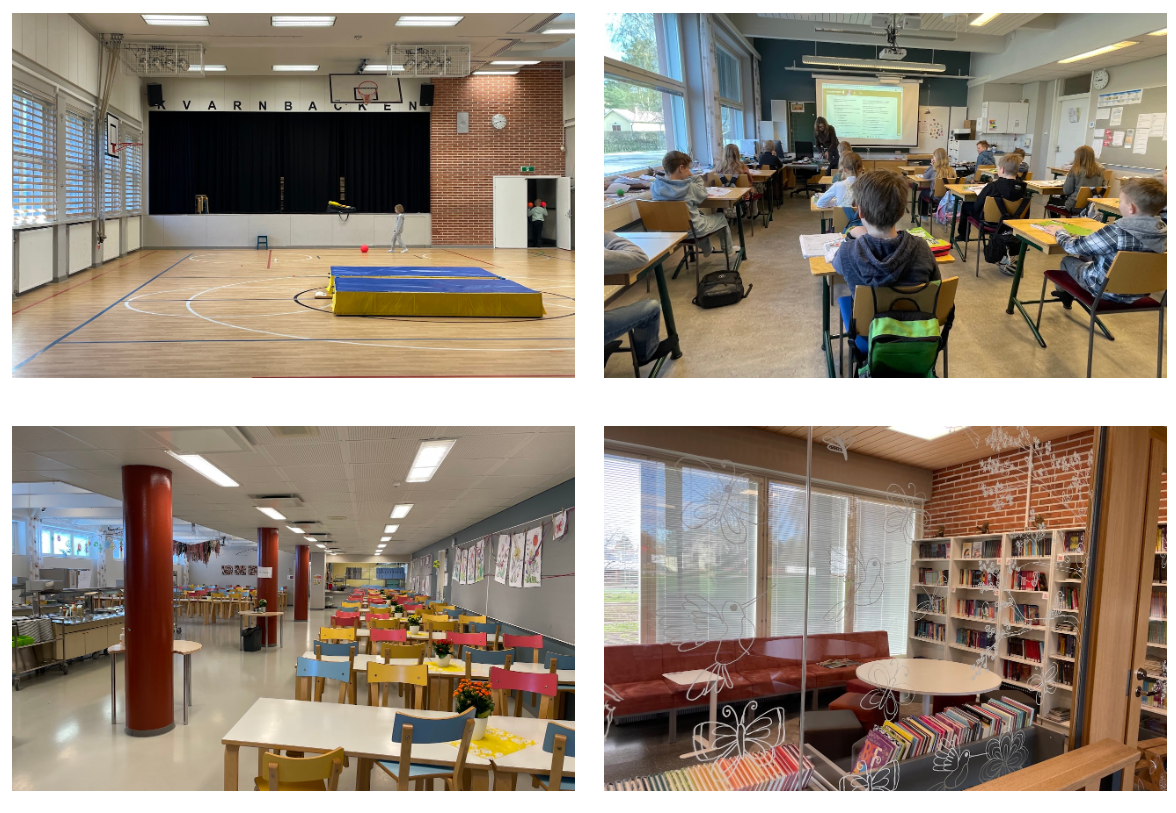
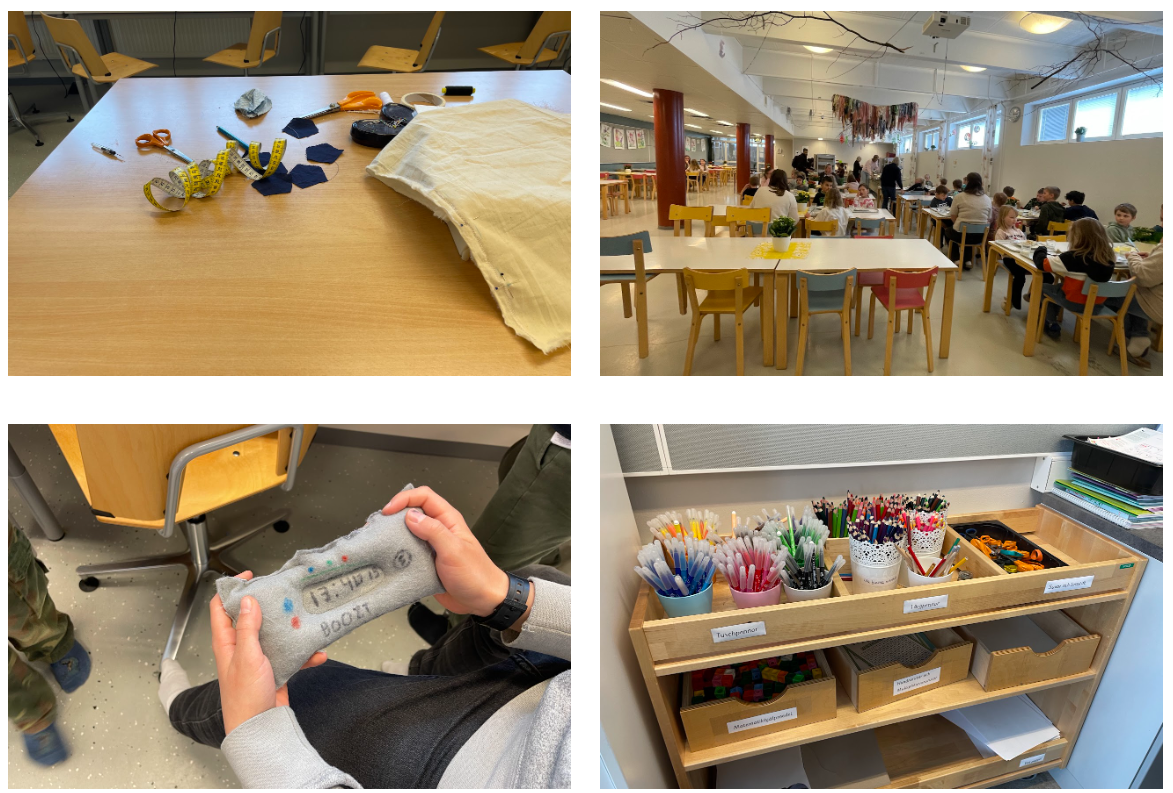
Kvarnbackens skola és una escola sueca, situada al centre de Porvoo, amb més de 70 anys d’història. Té 351 estudiants, 26 docents, 16 “assistents”, secretaria i direcció. Hi estudien alumnes des de “preschool” (6-7 anys) fins al grade 6 (1r ESO). L’horari varia segons l’edat de l’alumnat però comencen a les 9 i acaben entre la 1 i les 3, fent classes de 45 minuts, amb descansos de 15 minuts al llarg del dia i amb un descans més llarg per dinar, ja que tot l’alumnat dina al menjador escolar. Els objectius de l’escola són la col·laboració entre alumnes, i també entre docents, i el treball i millora de les habilitats bàsiques: lectura, escriptura i matemàtiques.
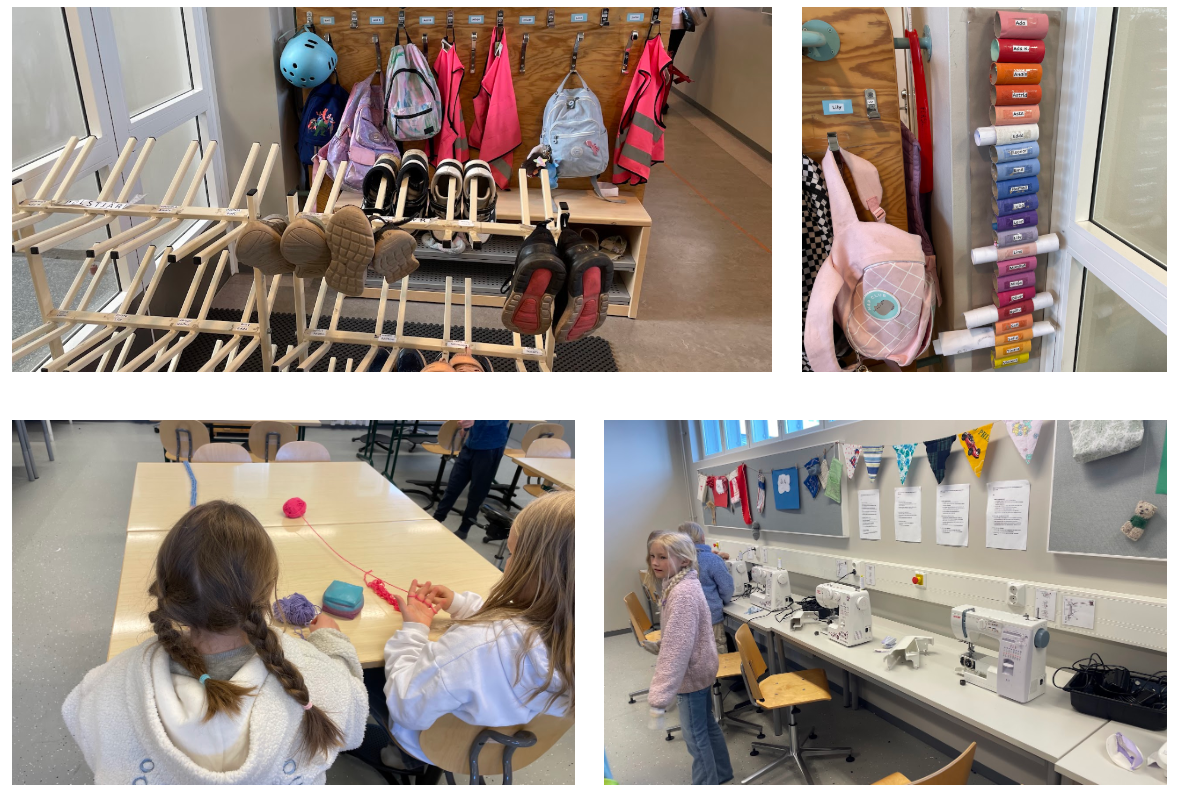
Ens ha cridat l’atenció que allà tot el personal i alumnat de l’escola va descalç o amb sabatilles. Les instal·lacions estan molt cuidades i el personal de neteja treballa durant la jornada escolar, vetllant perquè sempre estigui tot molt net. Durant l’estada a l’escola hem pogut observar que a cada aula hi ha un docent i un assistents. El clima de les aules és molt tranquil i silenciós, el to de veu a tot el centre és molt baix, dels docents i de l’alumnat. Els docents reforcen positivament qualsevol acció de l’alumnat, fent un feedback positiu en les respostes.
L’alumnat, des dels més petits fins als més grans ha demostrat molta autonomia, canviant d’espais dins l’escola per anar a les diferents aules d’especialitat, gestionant el seu propi temps en els descansos entre classes, a l’hora de dinar i sobretot, dins les aules en les activitats d’ensenyament-aprenentatge. Les classes de finès i suec estan organitzades per nivell segons la llengua materna de l’alumnat.
Hem pogut observar les aules de “preschool”, en què l’alumnat ha iniciat el dia amb unes cançons dirigides per la mestra, unes rutines curtes, i després han partit el grup per treballar numeració, a través d’una dinàmica en rotllana i posteriorment unes fitxes multinivell en què sumaven. S’oferia recursos manipulatius i més suport a l’alumnat que tenia més dificultats. La resta del grup estava al pati fent activitats lúdiques-esportives i després han intercanviat l’activitat. Un altre grup d’aquesta edat han fet, també en grup partit, activitats lúdiques al pati i els altres han fet una conversa en rotllana i després una activitat de dibuix a l’aula i a mesura que l’acabaven podien fer una altra activitat, com jugar en petit grup, repassar continguts a través de jocs, etc.
També hem assistit a classes de suec a “grade 2”, la mestra els ha llegit un conte mentre l’alumnat es feia massatges a l’esquena, en un ambient molt tranquil. Després han treballat ortografia a través de la consciència fonològica, amb un petit joc en què un alumne descrivia un dibuix i la resta endevinaven paraules i les classificaven i les han escrit conjuntament a la pissarra per observar la norma ortogràfica que han treballat. Més tard en petit grup de 3 infants, s’explicaven els deures que havien fet el dia anterior a casa, els corregien junts i llegien en petit grup en veu alta el text que ja havien llegit a casa i s’ajudaven entre ells. A la última activitat cadascú escollia un dibuix i anaven inventant i escrivint un conte sobre aquest dibuix, i qui ho havia fet i ho tenia acabat practicava cal·ligrafia.
Hem anat a veure una sessió de “handicrafts” a grade 3. L’alumnat d’una classe (20 alumnes aprox) estava dividit en dos grups. La primera meitat del curs un grup ha fet costura i l’altre fusteria, i a mig curs s’intercanvien, fent que tot l’alumnat faci els dos tallers complets.
El taller de costura es feia en un espai que disposava de màquines de cosir, vàries teles de diferents tipus i colors, fils, llana, elements per pintar, etc. Al llarg del mig curs han començat amb unes activitats amb papers per practicar la costura amb màquines de cosir i després tenien una llista d’activitats a fer en l’ordre que els indicava la mestra, però de manera autònoma, agafaven el material, les feien i quan n’acabaven una començaven amb la següent. Han fet bosses, coixins, peluixos, etc. Aquest taller el fa l’alumnat des del grade 3 fins al grade 6, augmentant la dificultat dels projectes.
El taller de fusteria es feia en un espai en què hi havia moltes eines ordenades, fustes de diferents tamanys per escollir, teles i pintures per decorar les produccions, i algunes màquines que només feia servir el mestre. L’alumnat ha fet diferents activitats, però han començat fent una activitat tots igual però després a final del curs han dissenyat i fet el seu propi projecte de fusteria. També han treballat de manera autònoma, utilitzant les eines, pintant, recollint, enganxant fusta, llimant, etc. Aquest taller el fa l’alumnat des del grade 3 fins al grade 6, augmentant la dificultat dels projectes.
Kvarnbackens skola
Kvarnbackens skola is a Swedish-speaking school located in the center of Porvoo, with more than 70 years of history. It has 351 students, 26 teachers, 16 “assistants,” administrative staff, and school management. The school serves students from preschool (ages 6–7) up to grade 6 (equivalent to the first year of secondary education). The schedule varies depending on the students’ age, but classes start at 9 a.m. and end between 1 and 3 p.m. Lessons last 45 minutes, with 15-minute breaks throughout the day and a longer break for lunch, as all students eat in the school canteen. The school’s objectives focus on collaboration among students and teachers, and on developing and improving core skills: reading, writing, and mathematics.
One aspect that stood out to us is that all school staff and students go barefoot or wear indoor slippers. The facilities are very well maintained, and the cleaning staff work during school hours to ensure everything remains clean. During our visit, we observed that every classroom had both a teacher and an assistant. The atmosphere in the classrooms is calm and quiet, with a low speaking volume from both students and teachers. Teachers give positive reinforcement for students’ actions, providing constructive and encouraging feedback.
Students, from the youngest to the oldest, demonstrated a high level of autonomy: moving between classrooms for specialized lessons, managing their own time during breaks and lunch, and especially within the classroom during learning activities. Finnish and Swedish classes are organized by language proficiency according to students’ mother tongue.
We observed the preschool classrooms, where students began the day with songs led by the teacher, followed by short routines. Then the group was split to work on numeracy, first with a circle activity and then with multi-level worksheets involving addition. Manipulatives and extra support were provided for students who needed more help. Meanwhile, the rest of the group played outdoor games, then they swapped activities. Another group of the same age also split: one half played outdoors, while the other half had a circle time discussion followed by a drawing activity. As students finished, they could choose another activity, such as small group games or review games to reinforce content.
We also attended Swedish lessons in grade 2. The teacher read a story to the students while they gave each other back massages, creating a calm and relaxed atmosphere. They then worked on spelling using phonological awareness through a small game in which one student described a drawing, and the others guessed the words, classified them, and wrote them on the board to observe the spelling rule being practiced. Later, in groups of three, they discussed the homework they had done the previous day, corrected it together, and read aloud in small groups the same text they had already practiced at home, helping each other. In the final activity, each student chose a picture and invented and wrote a story about it. Those who finished practiced handwriting.
We also observed a “handicrafts” session in grade 3. Students (around 20) were divided into two groups. During the first half of the school year, one group did sewing while the other did woodworking. At midyear, they swapped so that every student completed both workshops.
The sewing workshop took place in a room equipped with sewing machines, various types and colors of fabric, threads, yarn, painting supplies, and more. They began with paper-based activities to practice using the sewing machines. Then, following a list of activities in order provided by the teacher, they worked independently—choosing materials, completing tasks, and moving on to the next when finished. They made bags, cushions, stuffed animals, etc. This workshop runs from grade 3 to grade 6, with increasing project complexity.
The woodworking workshop was in a room filled with neatly organized tools, wood of various sizes to choose from, fabrics, paints for decoration, and some machines that only the teacher used. The students started with a common activity but later designed and built their own individual projects. They also worked independently—using tools, painting, tidying up, gluing, sanding wood, and so on. This workshop is also offered from grade 3 to grade 6, with progressively more advanced projects.
Lyceiparkens skola
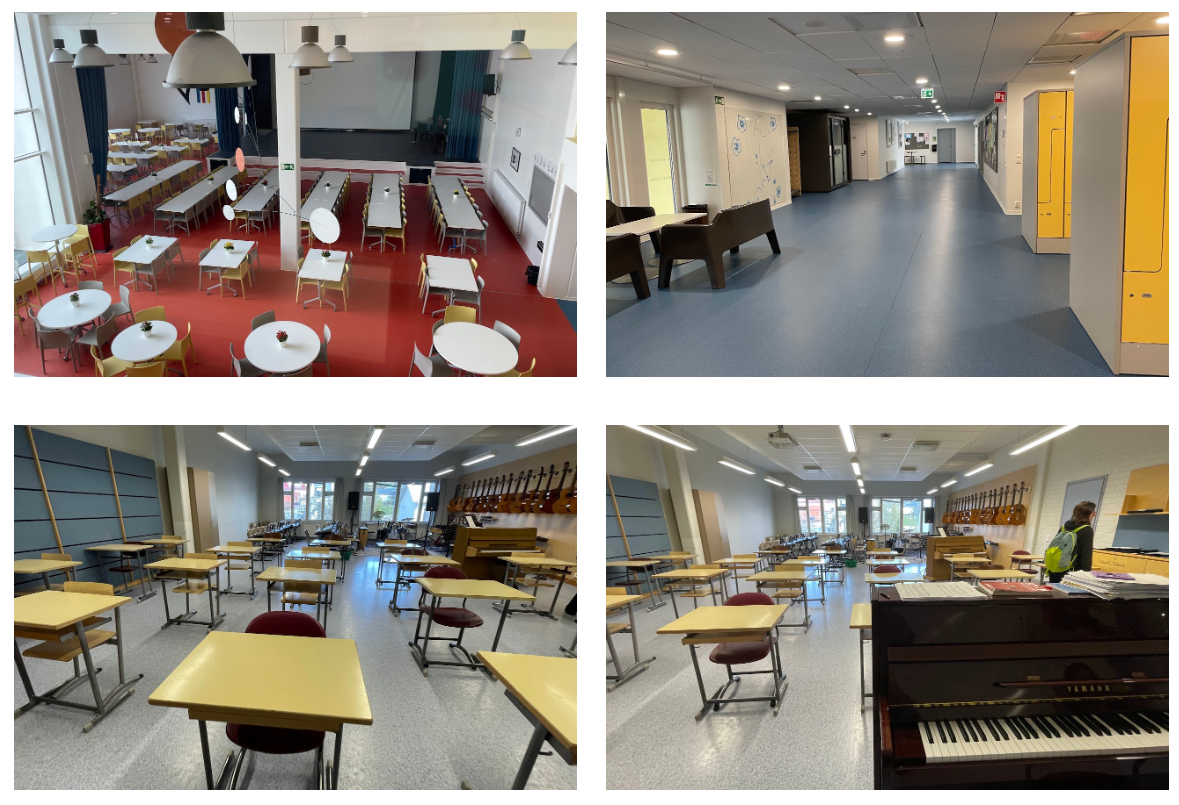
Lyceiparkens skola és una escola de secundària sueca, on hi ha alumnat des del “grade 7” al “grade 9”. És molt gran i té moltes instal·lacions diferents, ajustades a les necessitats de cadascuna de les assignatures. A més a més, l’edifici s’utilitza a les tardes per activitats extraescolars i s’aprofiten els mateixos espais com a centre cívic del barri.
L’horari és de 8:00 a 15.00 o de 9.00 a 13.00 depenent del dia. Tenen diferents estones d’esbarjo curtes i una de 45 minuts on dinen a la mateixa escola. Tenen assignatures obligatòries i d’altres optatives que poden escollir segons els seus interessos. Des de grade 8 poden escollir la llengua espanyola com a optativa. El grup de grade 9 estan preparant-se per fer un viatge a Granada a finals de maig. Aquest viatge és possible gràcies a la recollida de diners per part de l’alumnat a través de diferents activitats amb la comunitat.
Cal destacar l’autonomia de tot l’alumnat en moure’s pels diferents espais de l’edifici i la confiança del professorat en ells. Tot i ser un institut gran amb 350 alumnes i 40 professionals es manté sempre un clima molt agradable i silenciós. En aquest institut tenen accés els alumnes de l’escola Grännäs, l’escola Kvarnbackens, l’escola Sannäs i l’escola Vårberga.
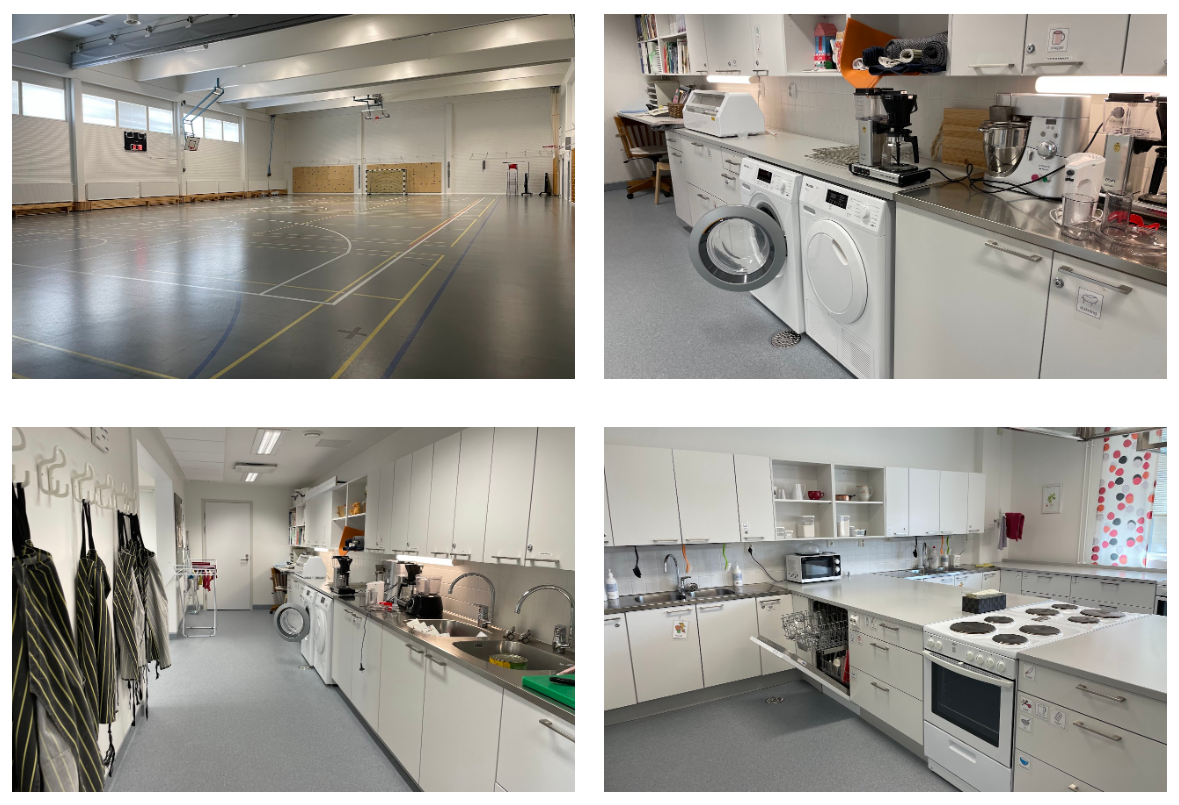
Una de les coses que ens ha cridat més l’atenció és l’espai d’economia domèstica. De manera obligatòria al grau 7 aprenen de manera teòrica i pràctica diferents tasques domèstiques com pot ser cuinar, netejar, planxar, cosir, etc. L’espai estava molt ben equipat, amb cuines, rentadores, escombres, màquines de cosir, bobines de tela per 16 alumnes alhora.
Un altre espai impactant de l’institut és l’aula de música, molt gran i equipada amb molts instruments i el gimnàs, un espai polivalent enorme. A més, moltes de les aules d’especialitats com química, tenien moltes eines per tal de que l’alumnat pogués experimentar i aprendre de manera més manipulativa.
Lyceiparkens skola
Lyceiparkens skola is a Swedish secondary school, with students from grade 7 to grade 9. It is very large and has many different facilities, adapted to the needs of each subject. In addition, the building is used in the afternoons for extracurricular activities, and the same spaces serve as a community center for the neighborhood.
The schedule is from 8:00 to 15:00 or from 9:00 to 13:00, depending on the day. Students have several short breaks and one 45-minute break during which they eat lunch at the school. They have both compulsory and elective subjects, which they can choose based on their interests. From grade 8 onwards, they can choose Spanish as an elective. The grade 9 group is currently preparing for a trip to Granada at the end of May. This trip is made possible thanks to the students’ fundraising efforts through various activities with the community.
A notable aspect is the students’ autonomy in moving around the different areas of the building and the trust the teaching staff places in them. Despite being a large school with 350 students and 40 professionals, the environment remains very pleasant and quiet. Students from Grännäs School, Kvarnbackens School, Sannäs School, and Vårberga School are eligible to attend this school.
One of the things that caught our attention the most was the home economics area. In grade 7, students are required to learn both the theory and practice of various household tasks such as cooking, cleaning, ironing, sewing, etc. The space was very well-equipped, with kitchens, washing machines, brooms, sewing machines, and rolls of fabric for up to 16 students at a time.
Another impressive space in the school is the music room, which is very large and filled with many instruments, as well as the gym, a huge multipurpose area. Moreover, many of the specialty classrooms, such as chemistry, were equipped with numerous tools to allow students to experiment and learn in a more hands-on way.
Sannäs skolas
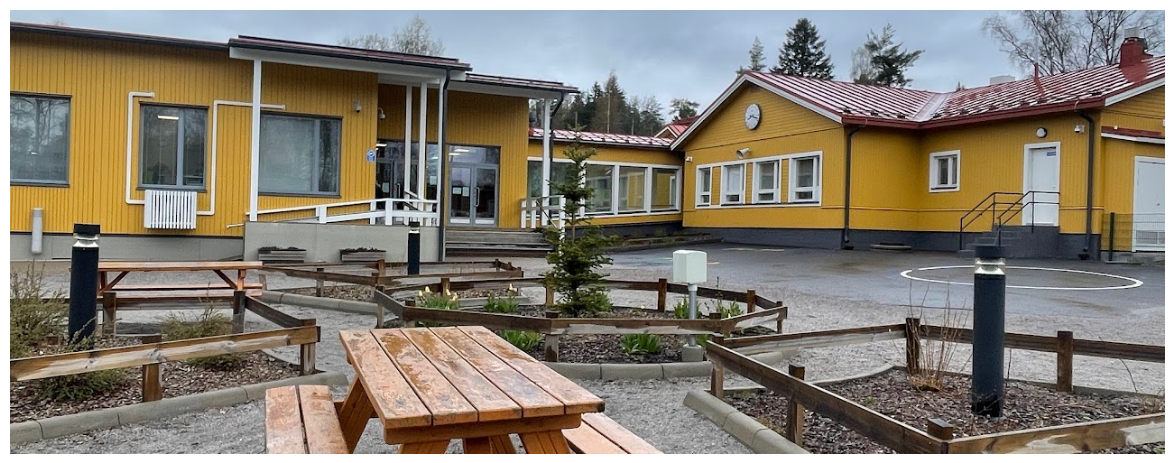
Avui hem visitat Sannäs skolas, una escola sueca situada a les afores de Porvoo, en un entorn rural i envoltada de natura. És una escola amb 95 alumnes, des de primer grau fins a sisè grau, i uns 15 mestres. L’edifici de l’escola és molt nou i el pati és un espai molt ampli, amb moltes propostes de joc i envoltat d’arbres. A dins de l’escola hi havia les diferents aules dels grups, i també hi havia diferents espais comuns, que s’utilitzaven per fer diferents activitats en què alumnat de diferents grups treballaven junts. L’ambient de treball era molt silenciós i l’alumnat tenia molta autonomia, cosa que es potenciava en tot moment i en totes les situacions educatives.
Segons l’edat, l’alumnat feia més o menys hores de classe, començaven tots a les 9, però els més petits acabaven a la 1 i els més grans cap a les 3 de la tarda. Durant aquestes hores, feien 2 o 3 descansos de 15 minuts al pati, i en un d’aquests descansos més llarg, dinaven al menjador escolar, amb els mestres.
Algunes de les àrees es treballaven de manera interdisciplinar en projectes que feien 5 sessions setmanals i que duraven 1 mes o 1 mes i mig, i en què es treballaven temes establerts a cadascun dels cursos. Alguns de les altres àrees es treballaven de manera més sistemàtica, amb llibres, quaderns i explicacions orals per part del docent. Potenciaven molt el treball oral, ja fos en rotllanes amb els més petits, o amb explicacions, converses, preguntes a l’aula amb els més grans. Donaven molta importància a fer una part de treball oral, prèvia al treball escrit o manipulatiu.
Una de les activitats que feien alumnes de “grade 5” i “ grade 6” barrejats que consistia en 3 tallers, rotatius que feien tots al llarg del curs: taller de fusta, taller de cosir i taller de mitja i ganxet. En aquests tallers aprenien les diferents habilitats i a utilitzar les diferents eines. En els altres cursos també hem pogut observar tallers com el de costura o tallers d’art en què feien fang o pintaven. Per a aquests tallers, l’alumnat disposava de tot el material necessari que estava molt ordenat i situat al seu lloc, cosa que feia que l’alumnat pogués agafar, utilitzar i recollir el que necessités. Fos el curs que fos, aquests tallers, ajustats a l’edat dels infants, fomentaven molt la creativitat i l’emprenedoria, a través del disseny de productes.
Una altra de les coses que hem pogut observar era l’impuls de la lectura, ja que en tots els cursos, des del grade 1 al grade 6, llegien una estona cada dia, escollien els llibres conjuntament amb la mestra, alguns llegien en petit grup en veu alta i per torns, i a més a més, a casa cadascú llegeix un llibre al mes i n’ha de fer un resum o presentació davant dels seus companys amb una explicació d’aquest.
Al llarg de la jornada hem observat alumnat dels diferents cursos, hem assistit a classes de diferents assignatures i hem pogut establir converses amb els docents del centre en què ens han explicat coses sobre l’educació i la cultura finesa.
Sannäs skolas
Today we visited Sannäs skola, a Swedish-language school located on the outskirts of Porvoo, in a rural environment surrounded by nature.
It is a school with 95 students, from first to sixth grade, and about 15 teachers. The school building is very new and the playground is a large open space with many play options and surrounded by trees. Inside the school, there were classrooms for the different groups, as well as several common areas that were used for various activities where students from different groups worked together. The working environment was very quiet, and the students had a great deal of autonomy, which was encouraged at all times and in all educational situations.
Depending on their age, students had more or fewer hours of class. They all started at 9 a.m., but the younger ones finished at 1 p.m. and the older ones around 3 p.m. During the school day, they had two or three 15-minute breaks outside, and during one of the longer breaks, they had lunch in the school cafeteria along with their teachers.
Some subjects were taught in an interdisciplinary way through projects that took place over five weekly sessions and lasted for about a month to a month and a half. These projects covered specific topics assigned to each grade. Other subjects were taught in a more systematic manner, using textbooks, workbooks, and oral explanations by the teacher. Oral work was highly encouraged—whether through circle time with younger students or through explanations, discussions, and questions in class with older students. They placed great importance on doing oral work before engaging in written or hands-on tasks.
One of the activities for mixed groups of grade 5 and grade 6 students consisted of three rotating workshops that all students participated in throughout the school year: a woodworking workshop, a sewing workshop, and a knitting and crocheting workshop. In these workshops, students learned various skills and how to use different tools. In other grades, we also observed workshops like sewing or art, where students worked with clay or painting. For these workshops, students had access to all the necessary materials, which were well-organized and easy to find, allowing them to take, use, and put away what they needed independently. Regardless of the grade, these workshops—adapted to the children’s ages—strongly fostered creativity and entrepreneurship through product design.
Another thing we observed was how reading was approached. In all grades, from grade 1 to grade 6, students read for a while each day. They selected books together with the teacher; some read aloud in small groups, taking turns. Additionally, at home, each student reads one book per month and must present a summary or oral presentation to their classmates, explaining what the book was about.
Throughout the day, we observed students from different grades, attended classes in various subjects, and had the opportunity to speak with the school’s teachers, who shared insights with us about Finnish education and culture.
Sannäs skolas
Avui hem visitat Sannäs skolas, una escola sueca situada a les afores de Porvoo, en un entorn rural i envoltada de natura. És una escola amb 95 alumnes, des de primer grau fins a sisè grau, i uns 15 mestres. L’edifici de l’escola és molt nou i el pati és un espai molt ampli, amb moltes propostes de joc i envoltat d’arbres. A dins de l’escola hi havia les diferents aules dels grups, i també hi havia diferents espais comuns, que s’utilitzaven per fer diferents activitats en què alumnat de diferents grups treballaven junts. L’ambient de treball era molt silenciós i l’alumnat tenia molta autonomia, cosa que es potenciava en tot moment i en totes les situacions educatives.
Segons l’edat, l’alumnat feia més o menys hores de classe, començaven tots a les 9, però els més petits acabaven a la 1 i els més grans cap a les 3 de la tarda. Durant aquestes hores, feien 2 o 3 descansos de 15 minuts al pati, i en un d’aquests descansos més llarg, dinaven al menjador escolar, amb els mestres.
Algunes de les àrees es treballaven de manera interdisciplinar en projectes que feien 5 sessions setmanals i que duraven 1 mes o 1 mes i mig, i en què es treballaven temes establerts a cadascun dels cursos. Alguns de les altres àrees es treballaven de manera més sistemàtica, amb llibres, quaderns i explicacions orals per part del docent. Potenciaven molt el treball oral, ja fos en rotllanes amb els més petits, o amb explicacions, converses, preguntes a l’aula amb els més grans. Donaven molta importància a fer una part de treball oral, prèvia al treball escrit o manipulatiu.
Una de les activitats que feien alumnes de “grade 5” i “ grade 6” barrejats que consistia en 3 tallers, rotatius que feien tots al llarg del curs: taller de fusta, taller de cosir i taller de mitja i ganxet. En aquests tallers aprenien les diferents habilitats i a utilitzar les diferents eines. En els altres cursos també hem pogut observar tallers com el de costura o tallers d’art en què feien fang o pintaven. Per a aquests tallers, l’alumnat disposava de tot el material necessari que estava molt ordenat i situat al seu lloc, cosa que feia que l’alumnat pogués agafar, utilitzar i recollir el que necessités. Fos el curs que fos, aquests tallers, ajustats a l’edat dels infants, fomentaven molt la creativitat i l’emprenedoria, a través del disseny de productes.
Una altra de les coses que hem pogut observar era l’impuls de la lectura, ja que en tots els cursos, des del grade 1 al grade 6, llegien una estona cada dia, escollien els llibres conjuntament amb la mestra, alguns llegien en petit grup en veu alta i per torns, i a més a més, a casa cadascú llegeix un llibre al mes i n’ha de fer un resum o presentació davant dels seus companys amb una explicació d’aquest.
Al llarg de la jornada hem observat alumnat dels diferents cursos, hem assistit a classes de diferents assignatures i hem pogut establir converses amb els docents del centre en què ens han explicat coses sobre l’educació i la cultura finesa.
Article about Sannäs skolas
Today we visited Sannäs skola, a Swedish-language school located on the outskirts of Porvoo, in a rural environment surrounded by nature.
It is a school with 95 students, from first to sixth grade, and about 15 teachers. The school building is very new and the playground is a large open space with many play options and surrounded by trees. Inside the school, there were classrooms for the different groups, as well as several common areas that were used for various activities where students from different groups worked together. The working environment was very quiet, and the students had a great deal of autonomy, which was encouraged at all times and in all educational situations.
Depending on their age, students had more or fewer hours of class. They all started at 9 a.m., but the younger ones finished at 1 p.m. and the older ones around 3 p.m. During the school day, they had two or three 15-minute breaks outside, and during one of the longer breaks, they had lunch in the school cafeteria along with their teachers.
Some subjects were taught in an interdisciplinary way through projects that took place over five weekly sessions and lasted for about a month to a month and a half. These projects covered specific topics assigned to each grade. Other subjects were taught in a more systematic manner, using textbooks, workbooks, and oral explanations by the teacher. Oral work was highly encouraged—whether through circle time with younger students or through explanations, discussions, and questions in class with older students. They placed great importance on doing oral work before engaging in written or hands-on tasks.
One of the activities for mixed groups of grade 5 and grade 6 students consisted of three rotating workshops that all students participated in throughout the school year: a woodworking workshop, a sewing workshop, and a knitting and crocheting workshop. In these workshops, students learned various skills and how to use different tools. In other grades, we also observed workshops like sewing or art, where students worked with clay or painting. For these workshops, students had access to all the necessary materials, which were well-organized and easy to find, allowing them to take, use, and put away what they needed independently. Regardless of the grade, these workshops—adapted to the children’s ages—strongly fostered creativity and entrepreneurship through product design.
Another thing we observed was how reading was approached. In all grades, from grade 1 to grade 6, students read for a while each day. They selected books together with the teacher; some read aloud in small groups, taking turns. Additionally, at home, each student reads one book per month and must present a summary or oral presentation to their classmates, explaining what the book was about.
Strömborgska skolan
Strömborgska skolan és una escola sueca que té alumnes des de “preschool” (6-7 anys) fins al grade 9 (4t ESO). Té un total de 500 alumnes aproximadament i 90 adults. Està a prop del centre de Porvoo, en un edifici i instal·lacions molt grans.
A final del grade 6, se li ofereix a l’alumnat la possibilitat de triar entre 4 idiomes, en trien 2 i fan algunes classes (5 sessions) per aprendre una mica aquells idiomes, ja que a grade 8 ja hauran de triar dos idiomes per fer-los al llarg de tot el curs, durant el grade 8 i 9. Vam anar a observar una classe d’espanyol del grade 6, en què l’alumnat començava a aprendre l’idioma a partir de frases bàsiques per utilitzar per saludar i per presentar-se. Van fer dinàmiques entre alumnes per presentar-se oralment, i després també van fer una dinàmica per repassar els números de l’1 al 20. Aquestes classes al final del grade 6, ho fan perquè l’alumnat conegui l’idioma i quan hagi d’escollir-ne dos per aprendre’ls al llarg de dos cursos tingui clar quins vol estudiar i tingui unes nocions bàsiques.
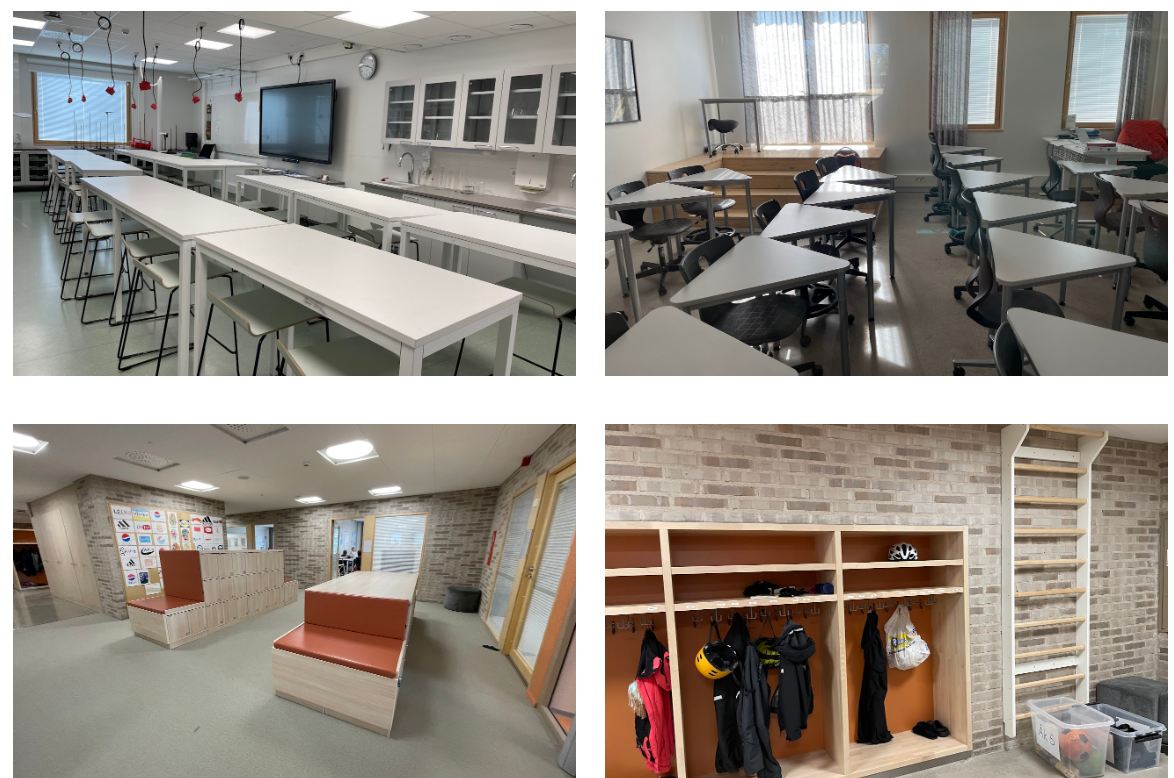
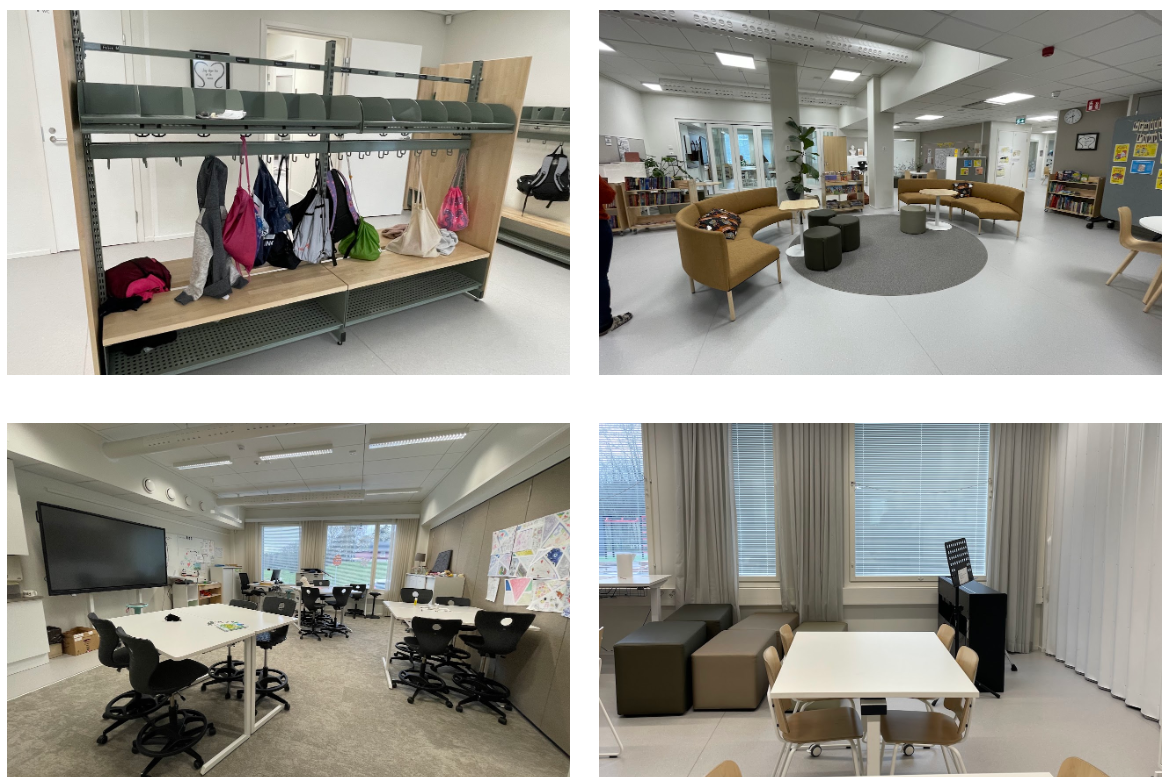
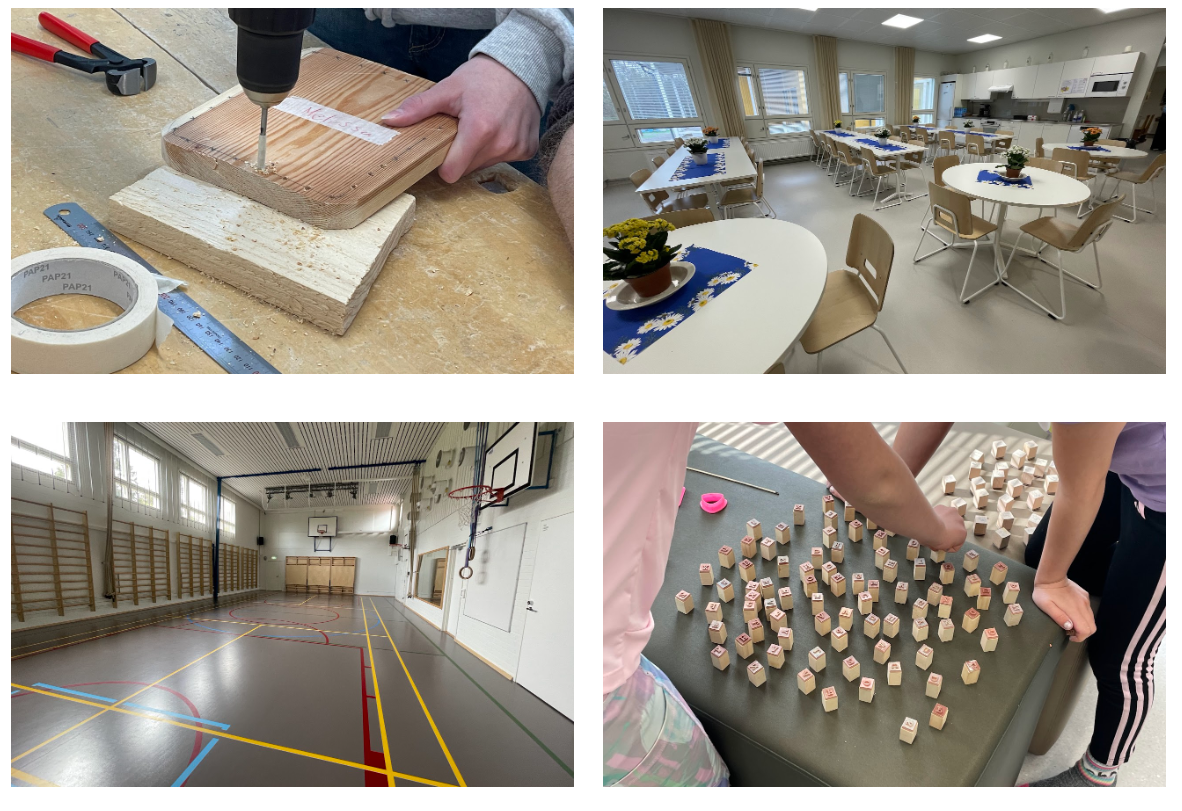
Després vam veure les instal·lacions de l’edifici, en què vam poder veure una part en què hi ha un taller de fusteria, una aula d’art, una aula de costura i una aula de cuina, equipada amb els diferents electrodomèstics i eines que es poden tenir en una casa, i en què aprenen a cuinar i a utilizar-los. Vam veure les aules dels diferents grups, una aula de química, equipada amb diferents recursos que es podrien trobar en un laboratori. Algunes de les aules són molt grans, i a més tenen una paret que fa que es connectin dues aules per fer-ne una encara més gran.
Strömborgska skolan
Strömborgska skolan is a Swedish-language school that has students from preschool (ages 6–7) up to grade 9 (equivalent to 4th year of ESO in Spain). It has a total of approximately 500 students and 90 staff members. It is located near the center of Porvoo, in a large building with extensive facilities.
At the end of grade 6, students are given the opportunity to choose between four languages. They select two and have a few introductory classes (5 sessions) to get a basic understanding of those languages. This is because in grade 8, they will have to choose two languages to study throughout grades 8 and 9. We observed a Spanish class in grade 6, where students were beginning to learn the language through basic phrases for greeting and introducing themselves. They did peer activities to practice introducing themselves orally, and then a group activity to review numbers from 1 to 20. These end-of-grade-6 classes are designed to give students exposure to the languages, so that when they have to choose two to study over two years, they already have a basic idea and understanding.
Afterwards, we toured the school’s facilities, where we saw areas including a woodworking workshop, an art classroom, a sewing room, and a kitchen classroom. The kitchen is equipped with various household appliances and tools, where students learn how to cook and use them. We also saw the classrooms for different student groups, a chemistry lab fully equipped with resources typical of a laboratory. Some of the classrooms are very large, and some have movable walls that can connect two rooms to make one even bigger.