


 CAT
CAT
Aquest divendres 21 de març de 2025 hem rebut uns visitants molt esperats, els alumnes de 4t d’ESO de l’Institut Josep Lluís Sert de Castelldefels acompanyats dels seus companys del programa d’intercanvi Erasmus+ del Lycée Montsquieu de Herblay sur-Seine de França i de la Stedelijke Scholen Gemeenschap Nijmegen (SSGN) dels Països Baixos. Tots plegats han vingut fins a Sant Joan Despí per fer un viatge en el temps i descobrir el llegat arquitectònic de Josep Maria Jujol, un dels grans mestres del Modernisme català. Anomenat arquitecte municipal el 1926, va esdevenir un personatge molt apreciat al municipi on va deixar una empremta inesborrable.
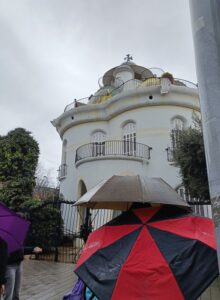
Organitzats en parelles i amb un plànol del nucli històric, han fet una gimcana completant un itinerari pels diferents punts d’interès per tal de respondre unes breus preguntes i col·locar l’enganxina corresponent per completar el dossier. Han observat notables edificis modernistes com ara la Torre Serra-Xaus (anomenada també la Casa de les Oques), la Torre Jujol i la Torre de la Creu o Torre dels Ous (catalogada com a Bé Cultural d’Interès Nacional), i d’altres indrets com la casa del manyà-forjador Josep Oliver, la porta de la qual té un treball de filigrana molt notable. En aquesta primera part del recorregut, han contemplat que Jujol destacava pel seu domini del ferro forjat, la tècnica del trencadís, les decoracions a base d’esgrafiats i sanefes amb motius animals i vegetals, i la creació de mecanismes d’obertura innovadors per a finestres i portes.
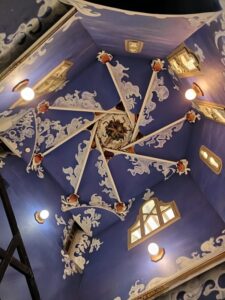
Després d’una pausa per esmorzar, han visitat el Centre Jujol – Can Negre, una antiga masia familiar del segle XVII reformada per Jujol i declarada actualment com a bé cultural d’interès nacional. Durant 15 anys, Jujol va construir-hi unes golfes, una capella d’estil barroc, i va afegir-hi un munt d’elements arquitectònics d’allò més creatius. Tant a la façana exterior com al seu l’interior, han pogut descobrir un munt de detalls i ornamentacions que fan referència a la figura de la Verge Maria i la seva assumpció en cos i ànima per obra divina. Qui indret tan especial!
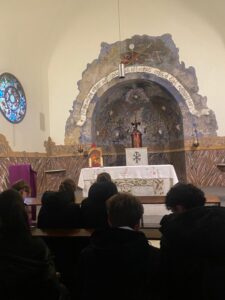
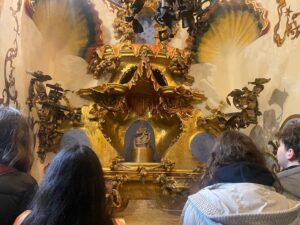
Finalment, han visitat l’Església Parroquial de Sant Joan Baptista, reformada per Josep Maria Jujol en els anys de la postguerra civil espanyola. De les intervencions fetes a l’església, cal destacar-hi els púlpits amb treballs escultòrics de guix, els rosetons laterals, els altars de la Verge de Montserrat i el Sagrari, on Jujol es va esplaiar en simbologia i sentiment.
Jujol destacava per la seva creativitat desbordant i la seva capacitat per fusionar arquitectura, art i natura. Els seus edificis són una explosió de formes orgàniques, colors vius i detalls sorprenents. A més, aquest arquitecte únic va ser un avançat en l’ús de tècniques sostenibles, prioritzant la llum natural, la visibilitat, la ventilació creuada i l’ús de cambres d’aire per a la regulació tèrmica. Estem segur que la seva obra ha captivat la majoria d’estudiants, que ja comencen a ser uns experts sobre el Modernisme català. A més, gràcies al treball en equip dels alumnes locals, francesos i holandesos, han pogut intercanviar coneixements lingüístics i culturals. Quina experiència tan enriquidora per tots!
ENG
On Friday, March 21, 2025, we had the pleasure of welcoming a group of enthusiastic visitors, the fourth-year ESO students from Institut Josep Lluís Sert in Castelldefels, accompanied by their Erasmus+ exchange partners from Lycée Montsquieu de Herblay sur-Seine, France, and Stedelijke Scholen Gemeenschap Nijmegen (SSGN) from the Netherlands. Together, they travelled to Sant Joan Despí to embark on a journey through time and explore the architectural legacy of Josep Maria Jujol, one of the most influential figures of Catalan Modernism. Jujol was appointed as the municipal architect of Sant Joan Despí in 1926, and throughout his career, he became a highly respected figure in the town, leaving behind an architectural heritage that remains admired to this day.
To make the visit interactive and engaging, the students worked in pairs and were given a map of the historic centre. Their challenge was to follow an itinerary that led them through key Modernist landmarks while answering questions and placing stickers in their activity booklets to complete the task. Along the route, they encountered remarkable examples of Modernist architecture, including the Torre Serra-Xaus, also known as the House of the Geese, the Torre Jujol, and the Torre de la Creu, also called the Egg Tower, which has been declared a Cultural Asset of National Interest. In addition to these buildings, students stopped at Josep Oliver’s house, which belonged to a blacksmith and features an elaborate wrought iron gate displaying impressive craftsmanship. During this first part of the visit, they observed Jujol’s signature artistic techniques, such as his mastery of wrought ironwork, his innovative use of the “trencadís” mosaic technique, his sgraffito patterns and friezes featuring plant and animal motifs, and his remarkable ability to design unique opening mechanisms for windows and doors.
After a short break for breakfast, the group visited the Jujol Centre – Can Negre, a seventeenth-century farmhouse that Jujol transformed into a Modernist masterpiece. This building, now protected as a Cultural Asset of National Interest, is a perfect example of Jujol’s imagination and artistic vision. Over the course of fifteen years, he redesigned the house by adding an attic that altered the original structure, a Baroque-style chapel with remarkable ornamentation, and a variety of unique architectural elements that blended functionality with aesthetics. Inside and outside the building, students were able to admire countless decorative details, including religious symbols and references to the Virgin Mary and her Assumption into Heaven. The richness of these elements made the visit to Can Negre a truly memorable experience.
To conclude the tour, students visited the Parish Church of Sant Joan Baptista, which Jujol restored after the Spanish Civil War. His interventions in the church include sculpted plaster pulpits that demonstrate his talent for working with different materials, lateral rose windows that allow natural light to filter into the church, and the altars of the Virgin of Montserrat and the Tabernacle, where Jujol displayed his deep religious devotion and symbolic artistry.
Jujol was an architect ahead of his time, blending art, architecture, and nature in a way that was truly unique. His buildings are an explosion of organic shapes, vibrant colours, and astonishing details, reflecting his creativity and innovation. He also introduced sustainable architectural techniques, prioritising natural light to enhance visibility and energy efficiency, cross-ventilation for better airflow and cooling, and the use of air chambers to improve thermal insulation.
By the end of the visit, students had not only deepened their understanding of Catalan Modernism but also engaged in cultural and linguistic exchange with their French and Dutch peers. This hands-on learning experience helped them strengthen their teamwork skills and broaden their perspectives on European artistic heritage. Without a doubt, this was a valuable and enriching journey, one that will surely inspire students to continue exploring the fascinating world of architecture and art.